Open Science in Orbit: An Example from the Boeing Starliner
NASA has been busy lately, not only in their efforts to get to the moon through their Artemis II mission, but also in their endeavors with the Boeing Starliner spacecraft.
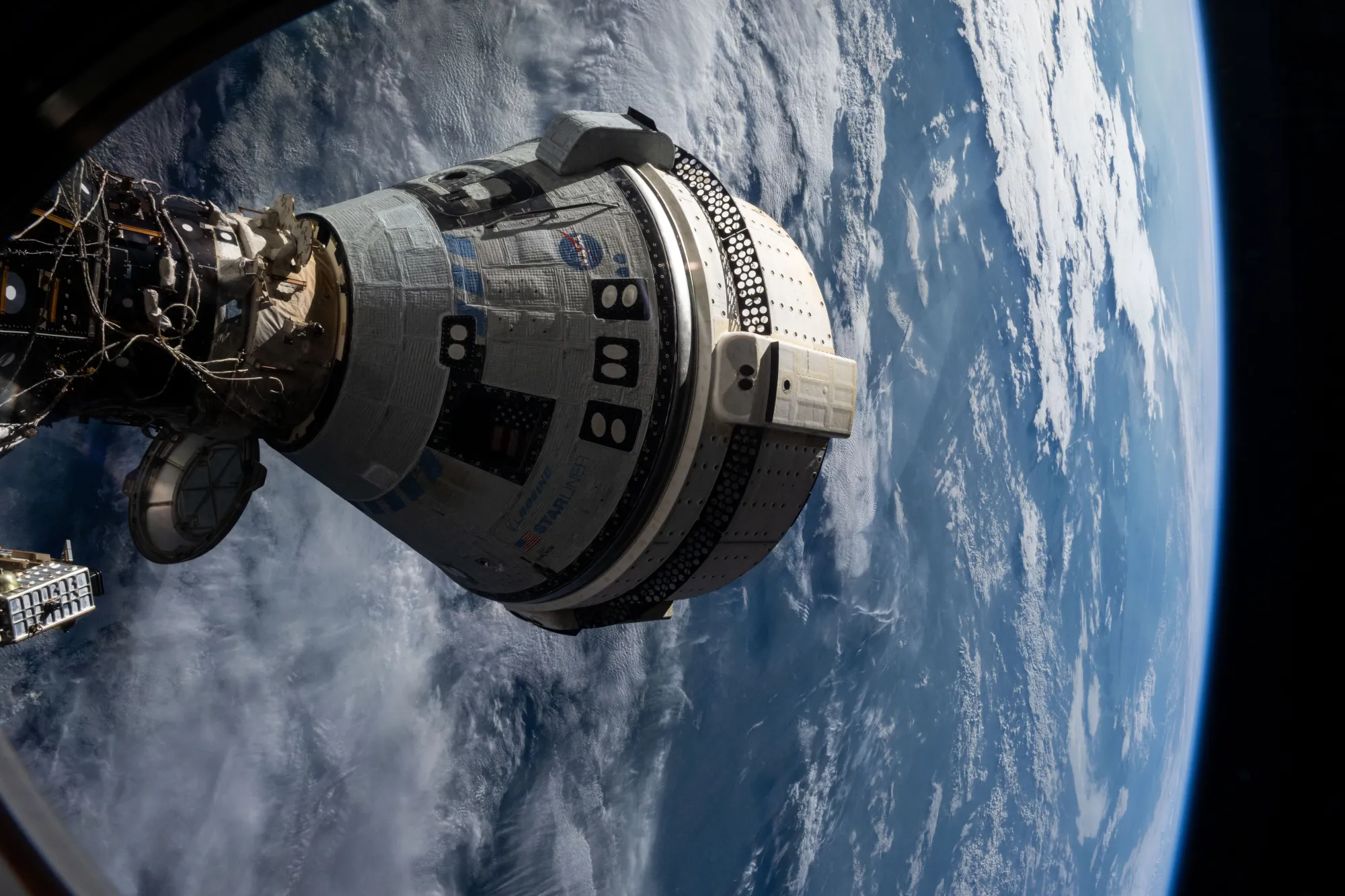
NASA recently launched an investigation following the Starliner’s Crewed Test Flight, which is an extension of the agency’s Commercial Crew Program. This program aims to deliver a mode of human transportation between the International Space Station (ISS) and the United States, in partnership with American private industry. The ISS is a fundamental research facility that allows NASA to evaluate common challenges faced during long-term missions. Understanding and overcoming these challenges will be imperative for the future of spaceflight.
Investigators recently pinpointed some of the key issues encountered during the initial Starliner launch in 2024, which include: hardware failures, qualification gaps, misguided leadership, and cultural breakdowns, ultimately defying the safety standards for human spaceflight set by the organization.
In response to the results of this investigation, a NASA administrator, Jared Isaacman, released a statement last month:
“To undertake missions that change the world, we must be transparent about both our successes and our shortcomings. We have to own our mistakes and ensure they never happen again. Beyond technical issues, it is clear that NASA permitted overarching programmatic objectives of having two providers capable of transporting astronauts to-and-from orbit, influence engineering and operational decisions, especially during and immediately after the mission. We are correcting those mistakes. Today, we are formally declaring a Type A mishap and ensuring leadership accountability so situations like this never reoccur. We look forward to working with Boeing as both organizations implement corrective actions and return Starliner to flight only when ready.”
NASA does not shy away from being transparent and open with its mistakes or failures, and this is an encouragement to scientists and researchers of all calibers. This culture of openness extends to even their most high-profile missions. See our post about Artemis II and how NASA handled the delays and technical setbacks with the same principles of transparency. They communicated challenges publicly, adjusted timelines without ego, and kept the scientific community informed every step of the way. Experiments can fail, but failure is a training ground for learning and innovation in any scientific field.
No single person cracked the code on getting to the moon. It took thousands of engineers, mathematicians, scientists, and dreamers, all building on each other's work, often without ever meeting! Open Science is the same concept on a larger scale. More people, more ideas, more problem-solving, more answers. It is a door for collaboration and discovery, and can transform these “small step(s) for man” into “giant leap(s) for mankind!”
Interested to learn more about Open Science? Join us for our next free training cohort: https://www.opensciencetraining.org/