Failure to Launch? How Artemis II Is Turning Setbacks into Shared Science
Our love for space started long before we could fully understand rocket science.
While other kids decorated their rooms with pop stars, Kelsi’s was filled with galaxies, planets, and glow-in-the-dark constellations. Her favorite sleep story is still “Journey to the Stars” by LeVar Burton.
Some of Sammy’s favorite childhood memories were made wandering beneath towering rockets in the U.S. Space and Rocket Center. Growing up near Birmingham, frequent trips to Huntsville meant standing in awe of historic spacecraft and, of course, grabbing astronaut ice cream before heading home. Those experiences turned curiosity into a lasting passion.
Even now, our fascination with outer space hasn’t faded, and with the Artemis II mission, NASA is returning to the moon! The excitement feels bigger than ever. But NASA isn’t just returning humans to deep space; they’re setting the tone for the future of exploration. Even more inspiring, they’re setting the standard by showing how Open Science principles can add value to even the most complex rocket launch.
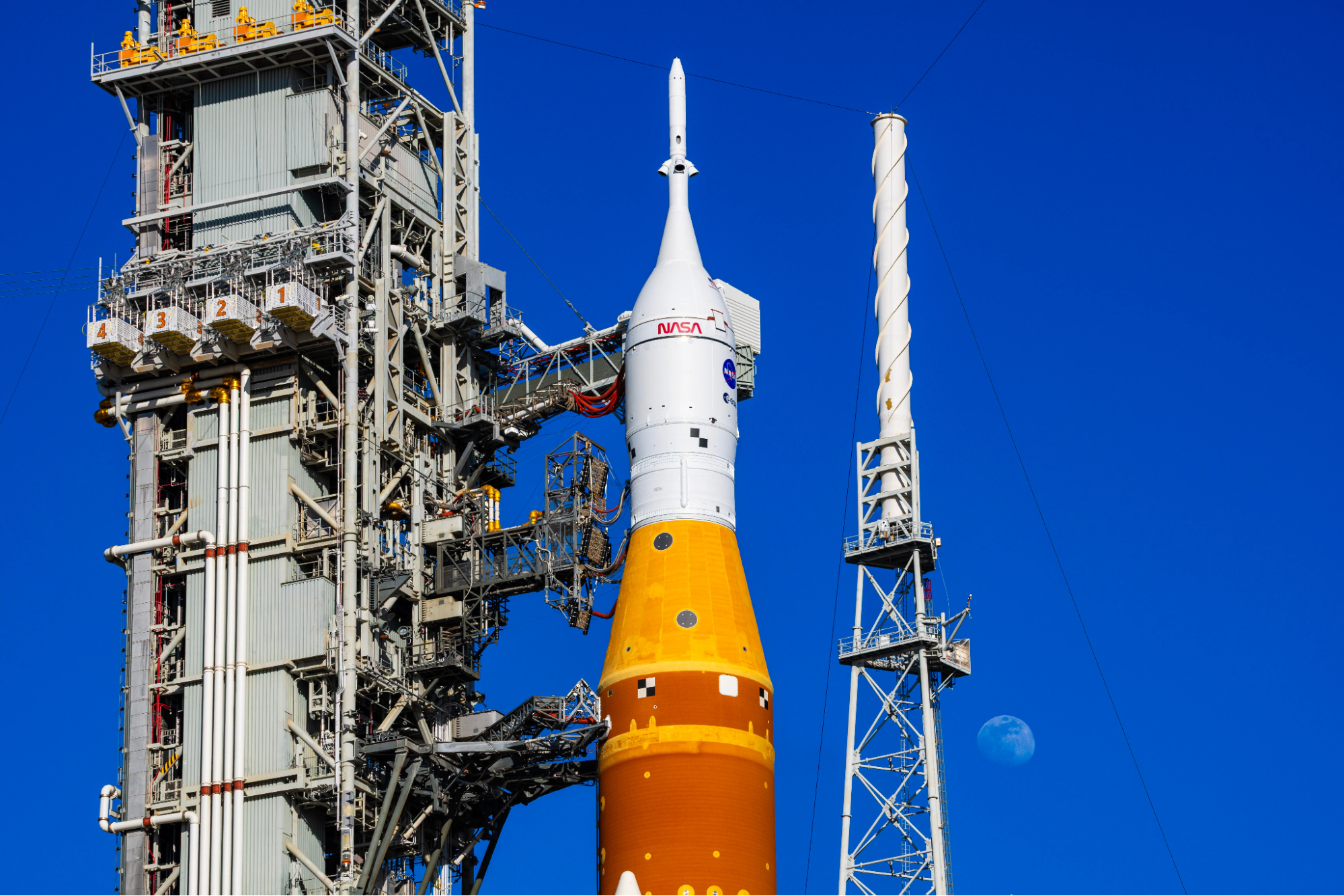
As with many experiments, this one has not gone perfectly according to plan. In a fuel test, more formally called a wet dress rehearsal, engineers fueled the massive Space Launch System rocket, practiced countdown procedures, and ran operations. But even NASA isn’t immune to problems:
- A liquid hydrogen leak
- A valve that needed adjustments
- Audio communication dropouts (NASA also has call connection issues!)
- Cold weather complications
How did NASA handle all of these issues and the setbacks? They investigated, re-evaluated, and planned their next test. This is not a failure. This is science working exactly as it should!
Admitting failures takes more courage than trying to push past issues to just achieve an outcome. Instead of hiding these issues, NASA scheduled a live-streamed news conference so the public could hear updates directly.
- They detailed the hydrogen leak.
- They explained the valve problem.
- They talked about cold-weather delays.
- They announced a new launch target window.
Nasa Administrator, Jared Isaacman, took to X on Saturday, February 21st and shared: “I understand people are disappointed by this development. That disappointment is felt most by the team at NASA, who have been working tirelessly to prepare for this great endeavor. During the 1960s, when NASA achieved what most thought was impossible, and what has never been repeated since, there were many setbacks. One historic example is that Neil Armstrong spent less than 11 hours in space on Gemini 8 before his mission ended prematurely due to a technical issue. A little over three years later, he became the first man to walk on the Moon.”
The Artemis II crew consists of astronauts from the United States and Canada and is paid for by the public. When publicly funded research shares both successes and setbacks, it reinforces accountability—a fundamental principle of Open Science. It shows that safety, ethics, and careful review come before headlines, proving that this isn’t just about publishing results, it’s about inviting the world into the process. This is the transparency that builds trust in science!
We test to learn from the results, carefully document what we discover, and apply those insights to improve the next attempt. While documentation is not the most “fun” part of our jobs, reporting today’s troubleshooting becomes tomorrow’s improvement. Reproducibility requires repetition and patience (another important Open Science principle). It’s sometimes frustrating (and sometimes extremely frustrating), but it’s how we build confidence in results, whether in a laboratory experiment or a rocket headed toward the Moon.
Seeing NASA implement these Open Science principles is especially motivating, as it emphasizes the idea that Open Science is possible at every level, from individual researchers to global institutions, and encourages us to continue pushing our own research toward greater accessibility, transparency, and impact.
Interested to learn how you can implement Open Science principles in your own research efforts? Join us for our next free training cohort: https://www.opensciencetraining.org/
Here’s to reaching for the Moon together, through Open Science!