3 Small Steps to Big Open Science Wins in 2026
Happy New Year from the Don’t Use This Code Open Science Team!
As we make our resolutions and goals for 2026, what is the best way to actually “do more open science” this year?
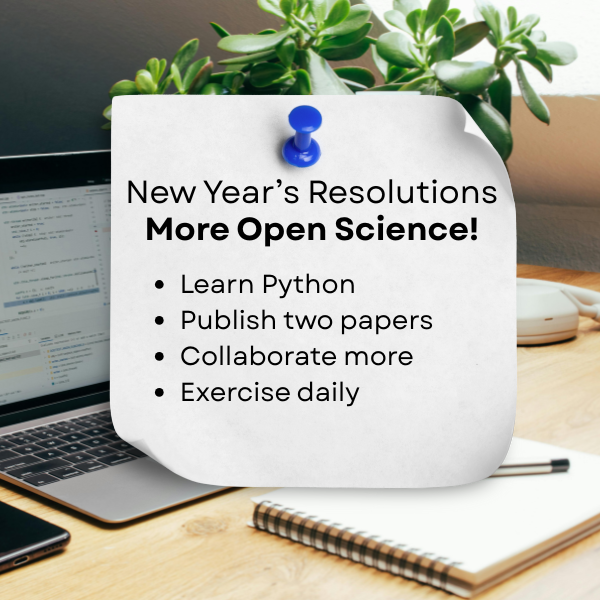
Open science empowers researchers to design stronger studies, conduct more transparent analyses, and share their findings more effectively.
Adopting open science doesn’t have to be complicated. Here are three simple ways to begin utilizing open science practices within your next project:
Before Your Study: Preregistration
Preregistration invites you to share your study’s methodology and data analysis plan before any data are actually collected.
By committing to your plans upfront, preregistration helps prevent p-hacking and data dredging, or distorting data until a significant result is achieved, HARKing (Hypothesizing After Results are Known), publication bias, and selective reporting, which strengthens the credibility of your findings from the very start (Riddell & West, 2025).
Thanks to the Center for Open Science, getting started is simple. They even provide clear, step-by-step guidance to walk you through the process of preregistration.
During Your Analysis: Make Your Data Findable

As you analyze your data, ensure your data management plan aligns with the FAIR principles: Findable, Accessible, Interoperable, and Reusable.
Well-documented metadata is key. Metadata provides essential context, such as how the data were collected and processed, which variables are included, how the dataset should be cited, and more. This allows others to truly understand and engage with your work (Riddell & West, 2025).
To make metadata FAIR-aligned, provide these helpful sources:
- CITATION (Credit): Findable
- GitHub/Zenodo (Repository): Accessible
- CONTRIBUTING (Collaboration): Interoperable
- CHANGELOG (History): Interoperable
- README (Documentation): Interoperable, Reusable
- LICENSE (Legalities): Reusable
By sharing your data in a FAIR-compliant way, you invite ongoing review and collaboration, allowing you to catch errors early and improving the quality of your final analyses (Riddell & West, 2025).
After Your Analysis: Preprints
Preprints are scientific manuscripts shared before formal peer review. Posting a preprint allows your research to be seen sooner and invites open dialogue around your work.
This early feedback strengthens your manuscript, sharpens your conclusions, and helps ensure that the final, peer-reviewed version is the strongest possible contribution to the field.
A new year is an invitation to discover differently. Join us in practicing Open Science in 2026!
Looking to kickstart your year of Open Science? You can find upcoming training sessions on our website.
References:
- Riddell, C. & West, K. (2025). Open Science Skills Training [Virtual Training]. Don't Use The Code.